
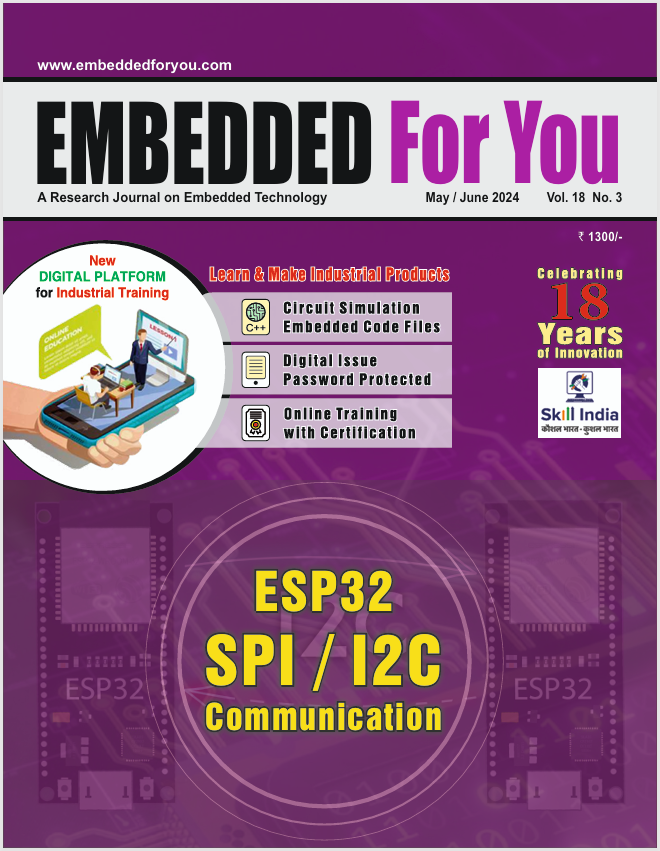
The IoT Data Acquisition System plays a vital role in modern smart technology by collecting real-time data from sensors and converting it into meaningful digital information. In today’s connected world, IoT applications rely heavily on accurate data acquisition to monitor, control, and automate devices remotely. Therefore, understanding how sensors communicate and how their signals are processed is essential for building reliable IoT solutions.
In an IoT Data Acquisition System, sensors act as intelligent detectors that measure physical parameters such as temperature, pressure, motion, humidity, and light. These sensors generate different types of outputs, including digital signals, analog voltages, and advanced serial communication protocols like I2C and SPI. Each output type requires a unique method of signal decoding and processing. As a result, engineers must clearly understand these formats to extract accurate real-world data.
Moreover, microcontrollers like the ESP32 power modern IoT data acquisition systems with high processing speed, built-in Wi-Fi, and Bluetooth connectivity. Using the ESP32, developers can not only read sensor data but also transmit it securely to cloud platforms for real-time monitoring and analytics. Consequently, this makes ESP32-based systems ideal for smart homes, healthcare devices, industrial automation, environmental monitoring, and agriculture applications.
In this educational IoT series, we focus on building a potent data logger system using ESP32. Step by step, we explore how digital sensors, analog sensors, and communication protocols work together inside a complete IoT framework. Furthermore, readers learn how sensor values are captured, processed, stored, and displayed through intelligent logging techniques.
Additionally, by mastering IoT data acquisition, users gain the power to remotely control everyday devices, analyze real-time information, and automate decision-making processes. This knowledge not only enhances technical skills but also opens doors to innovative product development and research opportunities.
👉 Learn more about our ESP32 IoT Development Boards and Embedded Project Kits on https://aet-embedtech.com/store/
In conclusion, the IoT Data Acquisition System using ESP32 transforms raw sensor signals into actionable intelligence. It bridges the physical and digital worlds, enabling smart automation, efficient monitoring, and real-time control across industries.
🔹 Frequently Asked Questions (FAQ)
Q1. What is an IoT Data Acquisition System?
An IoT Data Acquisition System collects real-time data from sensors and transmits it to cloud platforms for monitoring, analysis, and automation over the internet.
Q2. Why is ESP32 best for IoT data acquisition projects?
The ESP32 is ideal because it offers built-in Wi-Fi, Bluetooth, high-speed processing, and FreeRTOS support, which allows real-time data logging and wireless communication.
Q3. What types of sensor outputs are used in IoT systems?
IoT systems commonly use Digital outputs, Analog voltage outputs, I2C, and SPI communication protocols to collect and process sensor data.
Q4. How does ESP32 send data to the cloud?
The ESP32 sends data to cloud platforms using Wi-Fi through MQTT, HTTP, or REST APIs. Popular platforms include ThingSpeak, Firebase, and AWS IoT.
Q5. Where is an IoT Data Logger commonly used?
IoT Data Loggers are widely used in Smart Homes, Industrial Automation, Agriculture, Weather Monitoring, Healthcare, and Environmental Monitoring applications.
Q6. Is ESP32 suitable for beginners in IoT projects?
Yes, the ESP32 is beginner-friendly because it supports the Arduino IDE, has a large developer community, and offers extensive online documentation and tutorials.
Reviews
There are no reviews yet.